
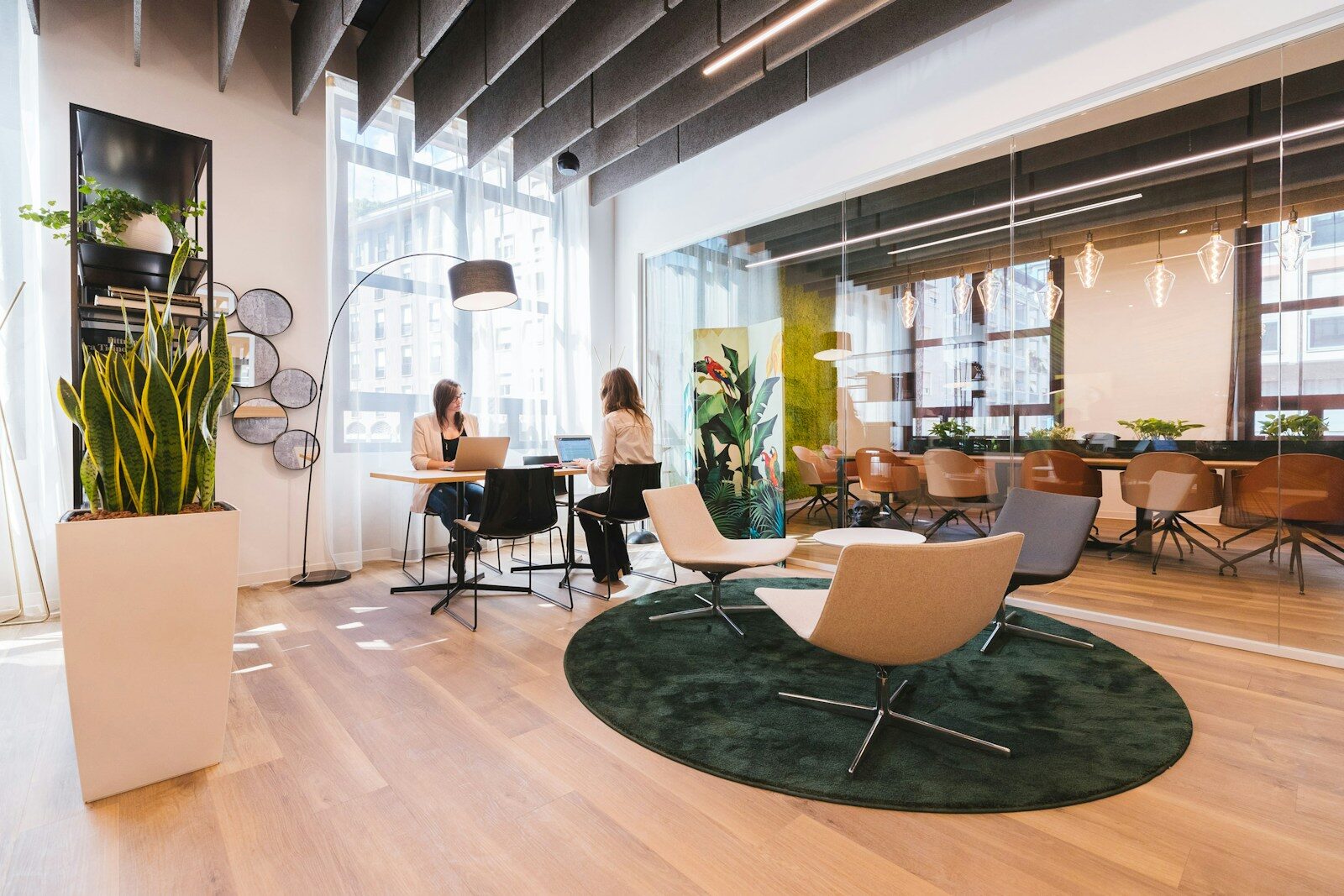
The office has a different job to do than it did a few years ago. When you can answer emails, join calls and complete focused work from home, travelling into a workplace needs to offer something beyond a desk and Wi-Fi. People increasingly value spaces that make working alongside colleagues easier. For your business, this creates an opportunity to think strategically about what your office can offer.
Why Workplace Experience Has Become a Business Priority
Hybrid working has changed what employees expect from office time. If someone makes the effort to commute, they are likely to notice whether the workplace supports what they came in to do. Small things like having a productive face-to-face conversation or finding a quiet corner for concentrated work make all the difference.
The workplace experience is a practical business consideration, as much as it is an aesthetic one. Start by looking at how people actually use the office across a typical week.
Rather than assuming people want more office perks, ask employees what regularly slows them down or makes the working day less comfortable. Short quarterly surveys are a good way to reveal recurring problems.
Creating Spaces That Encourage Connection and Collaboration
One advantage the office still holds over home working is the ease of spontaneous conversation. A quick chat after a meeting can solve something that might otherwise require another video call, while sitting together can make brainstorming feel more fluid.
The physical environment can encourage these interactions without forcing them. Sofas and small tables near team areas give colleagues somewhere to continue conversations. Larger communal tables work well when several people need to gather around laptops or documents. Acoustic booths and bookable rooms can sit alongside these social spaces so employees still have somewhere to concentrate.
Shared amenities can help too. A comfortable kitchen or breakout area with seating, good lighting and professional coffee machines gives people an everyday reason to step away from their desks and chat.
The Role of Everyday Amenities in Supporting Employee Wellbeing
If someone struggles with their wellbeing at work because there is nowhere comfortable to sit or spends an afternoon distracted by poor temperature control, small frustrations can quickly shape how they feel about coming in. Focus first on amenities employees will genuinely use throughout the week.
You can also think about different ways people recharge. One employee may want conversation over lunch, while another needs ten quiet minutes away from screens. Providing both social and calmer spaces gives people more control over their breaks.
How Better Workplace Experiences Deliver Long-Term Business Value
A well-planned workplace can earn its value through everyday behaviour. When employees can go about their business easily, they spend less time working around problems in their environment.
You also gain a clearer reason to maintain physical office space. Instead of measuring success by how many desks appear occupied, you can track meeting-room demand, space usage, employee feedback and recurring facilities issues. Reviewing these patterns every few months helps you adapt the workplace as teams and working habits change.
Creating a workplace people want to use does not require extravagant perks. It starts with paying close attention to how people work, removing everyday friction and giving them something worthwhile when they arrive.