
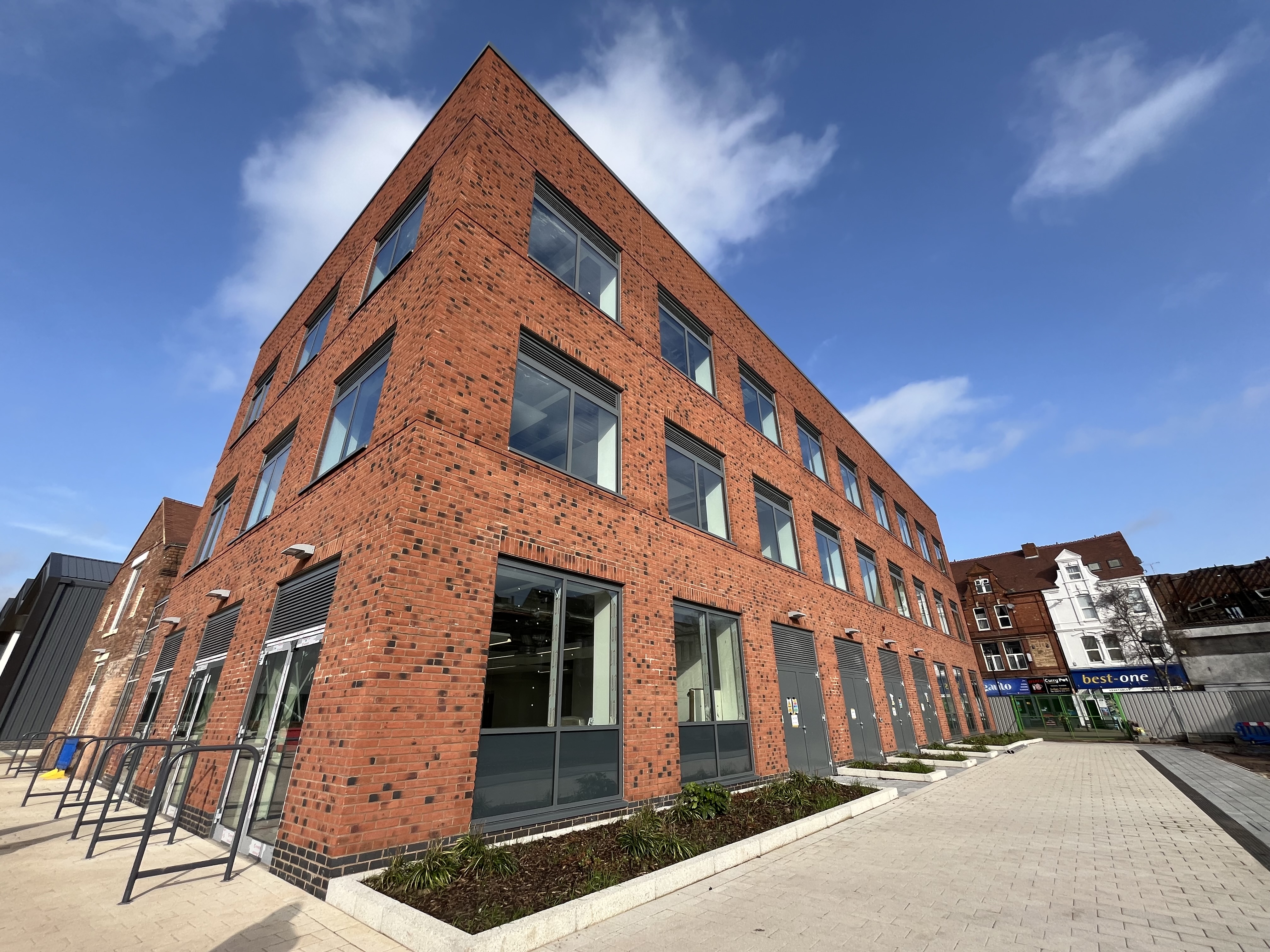
North Warwickshire and South Leicestershire College (NWSLC) have spoken of its pride in the “huge effort” it is making to reduce the number of young people not in education, employment or training (NEET).
Ahead of a government report into the NEET issue being published next week, NWSLC has said there is already a significant amount of work going on at its campuses to support young people who are classed as, or are at risk of, being NEET – with the effects of the programme described as “transformational”.
The college, which has taken part in consultations as part of the independent review by former cabinet minister Alan Milburn, says the biggest challenge is the increasing number of 16-year-olds who are leaving school without the qualifications needed to move on to their next steps.
However, NWSLC has implemented a raft of measures in recent years to address the issue, offering a variety of different ways for young people to re-engage with education and gain those all-important qualifications.
It has widened the scope of its foundation level, entry level and Level 1 courses, which serve as a stepping stone to higher level qualifications. This expansion led to the College seeing 230 additional students enrolling on courses compared to last year.
The College has a strong reputation for supporting those who have struggled with or been disengaged from school, and has a growing 14-16 provision that provides vital support to young people before they reach post-16 study. Nearly 80 per cent of the 300 learners the College supports through this provision remain at NWSLC for post-16 education, with all students progressing into wider education, employment and training.
In addition, NWSLC’s new Engagement and Progression provision offers up to 30 places for Leicestershire residents aged 16-24 who have an Education, Health and Care Plan (EHCP) and need a more gradual route back into learning.
Designed as a transition model, a trauma-informed approach was taken when developing the programme. Attendance and expectations build gradually, alongside personal development and vocational experiences. Every learner who successfully completes the programme is guaranteed a place on an appropriate vocational course at the college’s Wigston campus.
Other initiatives have included NWSLC’s Art in the Town programme, a dedicated art project held in conjunction with the Job Centre and the Department for Work and Pensions, and designed to help participants re-engage with education and work. Part of the programme focussed on ensuring this engagement continued after the project finished.
NWSLC’s Principal and CEO, Marion Plant OBE, said: “We know that a standard college timetable is not the right starting point for every young person. Initiatives such as our Engagement and Progression programme gives learners time to build their confidence and take part at a pace that works for them, while keeping a clear next step in sight.
“Getting to know each young person and what interests them is an important part of that. We want to help learners find a pathway that suits them, develop their strengths and see how their learning can connect to their future ambitions.”
Figures show that the longer a young person is NEET, the harder it is to re-engage them in education, training or employment. Research shows that those who are disengaged are more likely to end up and remain in the welfare or criminal justice system.
Marion said: “For some of these 16-year-olds, we are their last chance. They have been in education for 12 years and nothing has worked yet. Where we have engaged with this cohort, it has been transformational, which has a wider implication for them as individuals and society as a whole.
“With us, they have the flexibility to try new courses and find the pathway that suits them. Most importantly, it’s about pinpointing where their passion lies – that’s the golden nugget. That could unlock their engagement with us, including access to our pastoral support and our programmes like ‘Power Up Your Potential’ which is designed to equip students with skills for employment.”
The College has found one of the biggest drivers for a person becoming NEET is mental health, so extensive support has been put in place including counselling, chaplaincy services, individual coaching sessions and wellbeing clubs. This is particularly beneficial for young people who need support with the transition from being at home to attending college.
Emery Dickason was 16 when he left school without GCSEs in maths and English and no idea about what he should do next. He met careers advisors at NWSLC’s Hinckley campus who suggested he enrol on
a Level 1 Diploma for Entry to the Uniformed Services.
It was a pivotal moment in his life, as he is now planning to continue his studies to Level 3 with a view to becoming a firefighter. The college has also supported him in maths and English, and he is completing functional skills qualifications with plans to re-sit GCSE maths and English in the near future.
In addition, Emery was provided with a counselling service which he said has “really boosted” his mental health.
Emery, who is a student at NWSLC’s Nuneaton campus, said the support he has received, along with the benefit of working in smaller classes, has made him feel more confident about his studies and his future.
He said: “Being on a pathway gives me confidence that I know what I’m going to do in the future and that I’m going to do something with my life. The college has helped me so much. I enjoy going to college every day.”
To find out more about the courses on offer at NWSLC visit www.nwslc.ac.uk