
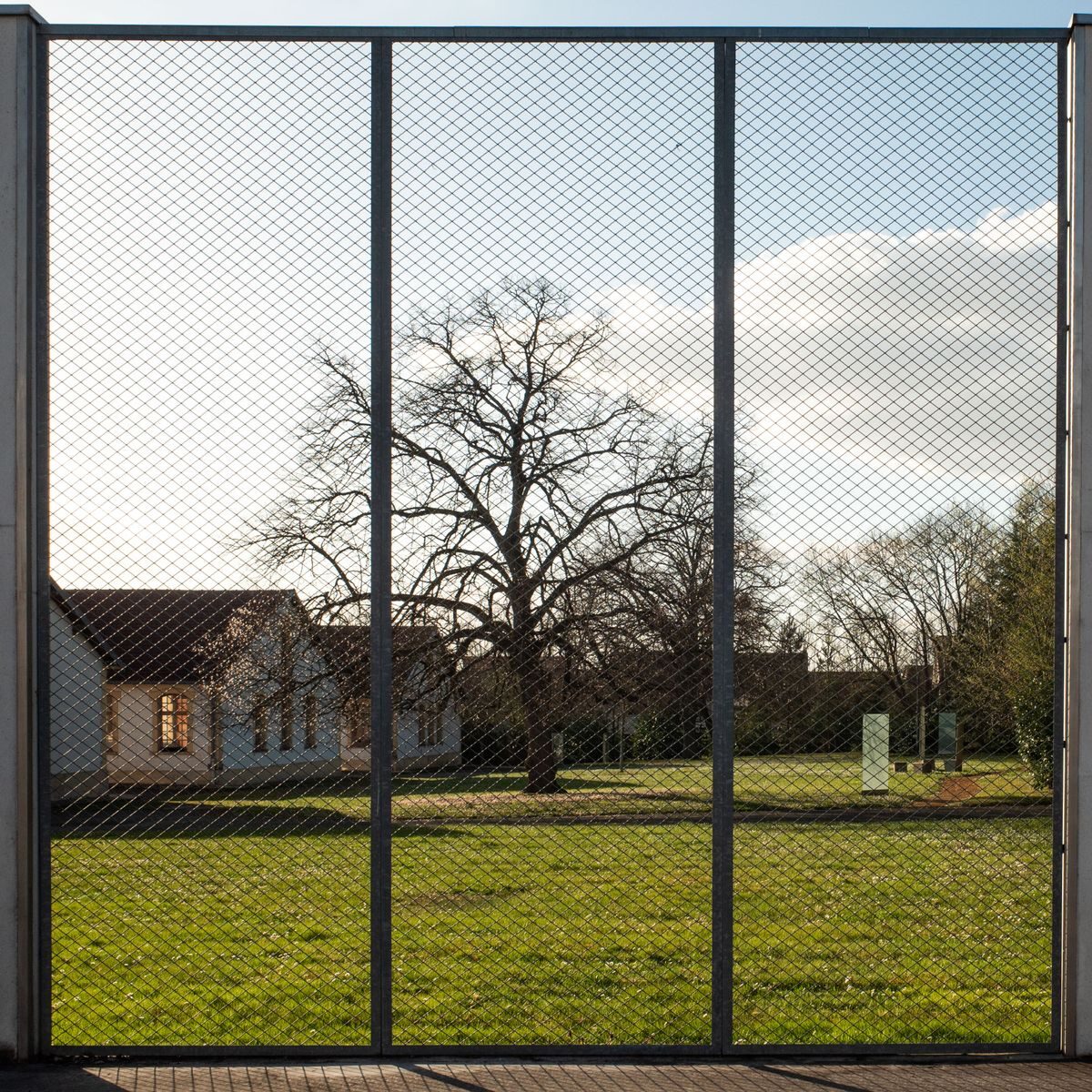
British homeowners are increasingly moving away from high-maintenance timber and bulky vinyl in favour of wire fencing – specifically, welded wire mesh and high-tensile steel. Favoured for its “invisible” profile and long-term resilience, wire has become a staple of sustainable and modern landscape designs.
When discussing sustainable garden landscaping with clients, the choice of boundary often causes hesitation; however, wire provides a solution that balances aesthetics with rugged practicality.
Unobstructed Borrowed Scenery
Modern landscaping embraces the concept of borrowed scenery, or the art of integrating the surrounding natural environment into your own garden. Unlike solid wood panels that create a boxy, claustrophobic feel, wire mesh provides a secure boundary without severing your connection to the landscape.
This transparency makes smaller British gardens feel significantly larger, allowing homeowners to see forest lines or garden vistas that traditional fencing would otherwise hide.
Superior Security and Anti-Climb Technology
In the realm of home security, visibility is a major asset. Privacy fences often create blind spots where intruders can hide, whereas wire fencing maintains a clear line of sight. In 2026, homeowners are opting for anti-climb mesh, often referred to as 358 mesh.
The apertures in this fencing are so small that it is virtually impossible to gain a foothold or finger-hold. When finished with a sleek black powder coating, the fence remains aesthetically pleasing while being nearly impossible to scale or cut without specialised industrial tools.
The Zero-Maintenance Lifecycle
Weekend warriors no longer need to spend hours staining, painting, and replacing rotted fence slats. Modern wire fencing, specifically galvanised and powder-coated steel, is engineered to last 25 to 50 years with no structural maintenance. It doesn’t warp in the summer sun or become brittle in the winter frost.
For those looking for a set-and-forget boundary, investing in high-quality wire fencing is the most cost-effective long-term move. Aside from an occasional hose-down to remove dust or cobwebs, there is no recurring cost or labour required to keep the perimeter looking pristine.
Climate Resilience and Wind Permeability
As climate change brings more volatile weather patterns and high-wind events to the UK, solid fences have become a liability. Close-boarded timber often acts like a sail, catching the wind and blowing over during storms, frequently taking the concrete posts with it. Wire fences allow wind to pass freely through the mesh.
This drastically reduces the physical stress on the fence posts and footings, making them much less likely to lean or collapse, saving homeowners thousands in emergency repair costs after a storm.
Intentional Containment for Pets and Pests
Wire fencing is the gold standard for homeowners with dogs or those battling garden invaders like rabbits and deer. Unlike old-fashioned chain link, high-quality welded wire has no sharp edges or snag points that could injure a pet’s paws or snout.
Homeowners can even choose graduated wire spacing – smaller gaps at the bottom to stop small critters from raiding the vegetable patch, and larger apertures at eye level to maintain that coveted invisible look. It’s the ultimate fusion of security and style for the modern British home.