
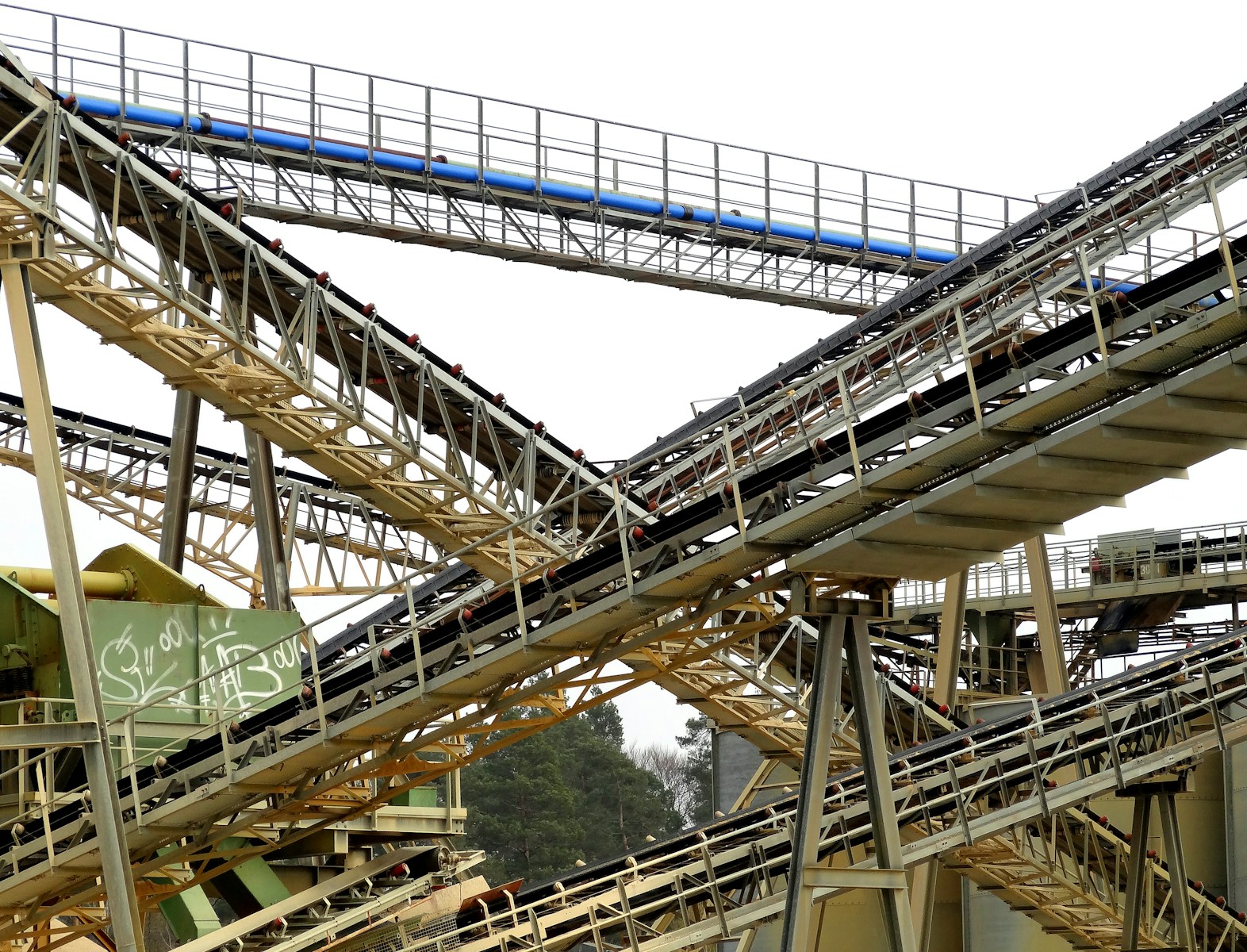
The UK is a key player in the recycling industry, reaching high eco-friendly standards when it comes to waste management. Conserving resources and promoting sustainability is becoming stricter with each passing year for both households and businesses, meaning efficiency is crucial to keep up with the pressure.
Conveyor systems have emerged as a hero among the recycling industry, revolutionising waste management processes, improving productivity and saving costs. In this article, we’re exploring the benefits that recycling conveyors provide for waste management across the UK.
Speeding Up Waste Sorting and Processing
There was once a bygone era where sorting and processing recyclable waste was done by hand. The recycling revolution in the UK started with campaigns in 1971, encouraging people to re-use and recycle as much as possible. The main recyclable material at this time was glass, but as the years went by, technology was introduced to sort and process different recyclable content.
Advanced conveyor systems provided an automated solution, enabling faster and more accurate sorting. This significantly reduced the need for manual labour which, in turn, also reduced the risk of illness among workers.
Today, advanced conveyor systems are integrated with optical sorters, magnets and air classifiers to separate plastics, metals, glass and paper. Recycling facilities can process more materials in less time and increase throughput with automation. With cleaner, better-sorted recyclables, these materials become more valuable and easier to repurpose, bettering the planet and helping businesses meet key recycling targets.
Reducing Labour Costs and Improving Workplace Safety
Waste management has traditionally been a labour-intensive process, requiring workers to manually sort and transport general waste and recyclable materials. This was both high in operational costs and far less safe than it is now with recycling conveyor systems.
Manual handling of sharp and heavy waste objects increases the risk of injury, including cuts and repetitive strain disorders. These risks can be detrimental to workers and businesses would face costly compensation claims and downtime. Conveyors automate many of the most costly and dangerous processes in waste management, helping to improve overall working conditions and save businesses money on labour and potential legal consequences.
Enhancing Material Recovery and Recycling Rates
For recycling and waste management businesses to make profit and ensure more accurate separation of recyclables, conveyor systems aren’t just an option but a necessity.
For large scale operations, conveyors can be installed with technology such as:
- Magnetic separators – to extract ferrous metals like steel and iron.
- Eddy current separators – to remove non-ferrous metals like aluminium.
- Optical sorting systems – to detect and sort different plastics and paper types based on infrared scanning.
Smaller operations may still require manual picking and sorting, with custom recycling conveyors being designed to suit different needs. But whether it’s large-scale material recovery or small-scale requirements, conveyor systems enhance and increase recycling rates, reducing waste sent to landfills or incinerators.
Increasing Operational Efficiency and Reducing Downtime
Demand for recycling is at an all time high, with no signs of slowing down. Recycling facilities need to keep operations running smoothly, and manual handling and inefficient processes often lead to delays and bottlenecks.
Productivity and operational efficiency are improved with automation from conveyor belt systems, as they can continuously control the flow of materials, preventing pileups and handling larger waste volumes. Modern recycling conveyors are extremely low maintenance and often come fitted with impact protection, digital volt meters, variable speed controllers and auto grease units. These features help to prevent costly breakdowns and minimise maintenance.
Supporting Sustainability and Reducing Carbon Footprint
Recycling is all about supporting sustainability and conveyor systems accentuate this support, contributing to a greener industry by reducing energy consumption and minimising waste. Older conveyor systems used to run on diesel, but now there are conveyor systems using a much eco-friendlier power source – electricity.
You can also stretch conveyor belts over large distances, reducing the need for heavy transport machinery that produces high levels of emissions. They also help reduce contamination in recyclables, increasing the volume of waste that can be repurposed. Recycling conveyors enable businesses to lower their carbon footprint and support the sustainability goals set out by the UK government.
A Round Up of the Conveyor Revolution
Across the UK, recycling and waste management businesses rely on efficiency, accuracy and sustainability to meet growing demand and environmental goals. Conveyor systems, along with recycling processes, have continued to evolve to automate and improve material handling. This revolution has helped reduce costs and increase recycling rates, as well as improve safety and overall productivity. It’s safe to say that if you’re not recycling without a conveyor system, you’re in the wrong line of work!
Image Source: Unsplash